
About ReGen
A regenerative systems company.
We're a small team building infrastructure for land restoration. Not a tech startup. Not a water utility. ReGen exists because the world's coastlines are ringed by degraded, arid land sitting metres from an unlimited water source — and almost no one has built a way to close that gap.
01 — Who we are
Built to close one gap.
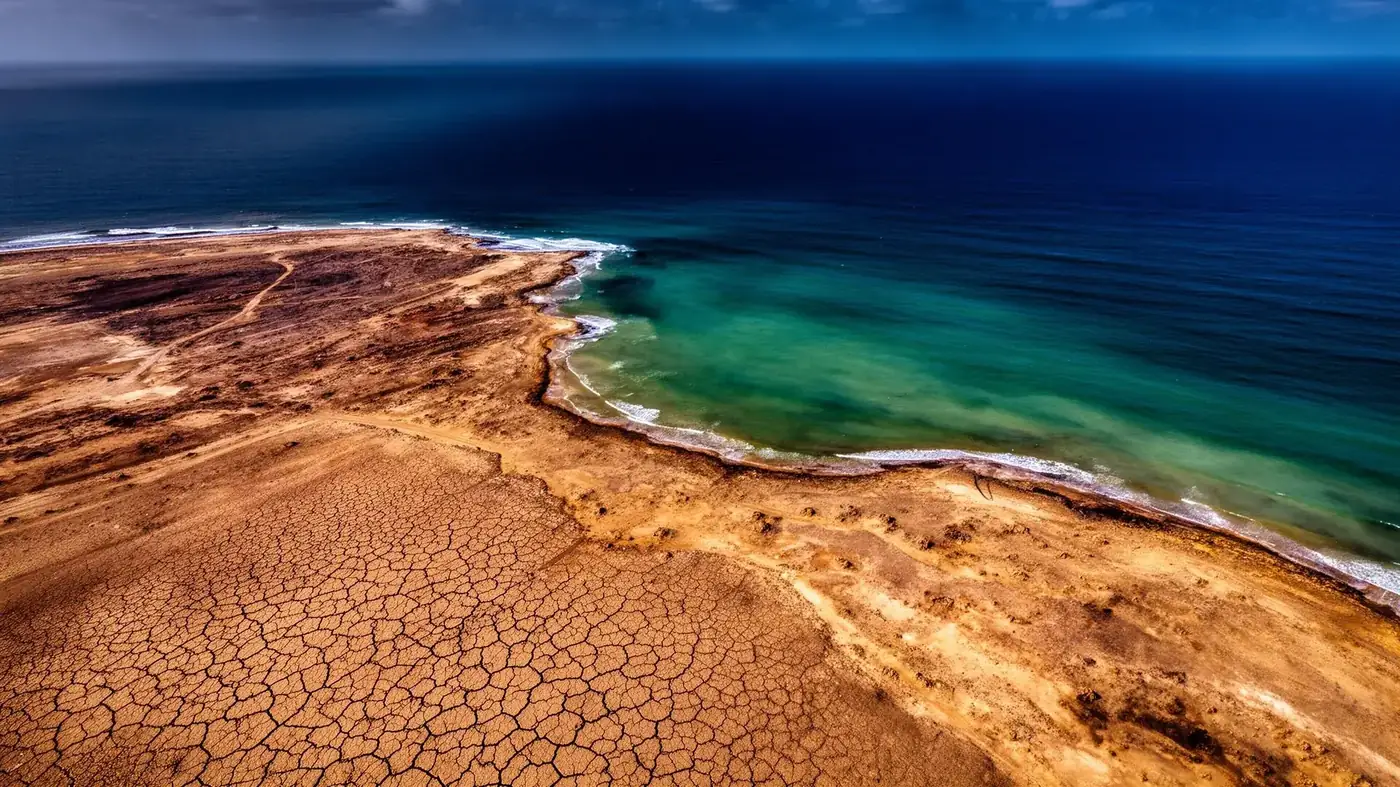
Roughly 40% of the world's land is degraded, and most of the worst-affected regions sit along coasts. The ocean is right there. The conversion is what's been missing.
ReGen was founded to make that conversion practical — at a price land stewards can afford, in a form that can be deployed without grid power, chemicals, or a civil-engineering project.
02 — The device
Solar desalination, modular by design.
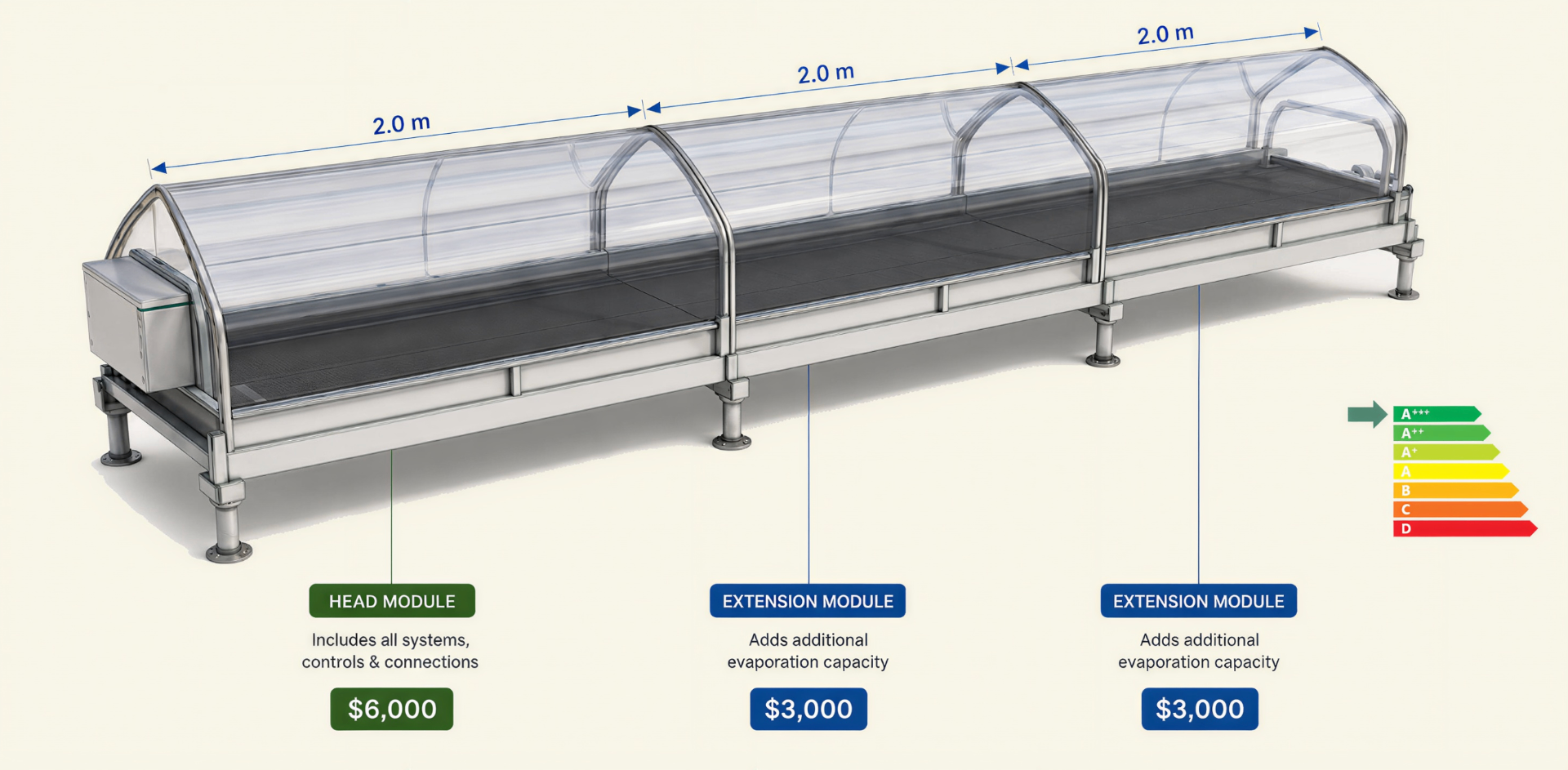
The ReGen collector is a low-temperature solar-thermal desalination unit — an arched borosilicate glass tube on a stainless frame. One head module manages flow and recovery; extension modules bolt on to scale capacity along the same axis. Built as repeatable modules for field deployment.
Each unit is engineered to run unattended in harsh coastal and desert environments — corrosion-resistant materials, sealed optics, and a sealed thermal loop that holds calibration across seasons. There is no membrane to replace, no high-pressure pump to service, and no chemical dosing line to monitor. A technician with basic training can commission a unit in a single afternoon.
Telemetry from the head module streams to the cloud over cellular or satellite backhaul, so a single operator can supervise a fleet of units across multiple sites from a laptop.
and location dependent
and more
solar thermal, zero grid
Stainless control unit that handles water intake, vapour routing, brine recovery, and IoT telemetry. One per array.
Arched glass tubes that bolt onto the head module to scale freshwater output linearly with site demand.
Concentrated brine — 7% salinity target — captured for salt, nutrient, and rare-earth recovery instead of being dumped back into the sea.
Ultra-low operational cost. Significantly less than traditional desalination through extremely low energy demand and solar-driven operation.
Modular architecture. Flexible deployment from small units to large-scale desert reforestation, designed for remote areas with plug-and-play setup.
Brine-to-fertilizer innovation. Instead of costly disposal, the system reprocesses concentrated brine into nutrient-rich water for regenerative use.
03 — Why modularity matters
Start at $6,000. Scale as the land does.
A repeatable module strategy lets projects start with feasibility-scale deployments, validate impact, then expand capacity as restoration or production targets grow.
One head module on the ground, producing water from day one. Add extension modules — plus Ground Extractor, Smart Tank and related system modules — as output targets grow.
One head module on site at entry cost.
Measure output, soil response, plant uptake.
Bolt on extension modules as demand grows.
04 — Development goals
What we're building toward.
Our roadmap is shaped by one question: how do we make coastal freshwater cheap, durable, and accessible enough that restoring degraded land becomes the default — not the exception.
Continue cutting the levelised cost of solar-desalinated water through manufacturing, material and yield improvements at every module revision.
Field-harden every component — glass, seals, frame, electronics — for a 15-year design life with minimal scheduled maintenance.
Turn 100% of concentrated brine into usable outputs: agricultural fertiliser, mineral salts, and recoverable rare-earth feedstock.
Publish telemetry APIs and integration kits so agronomists, utilities and researchers can build on top of the ReGen fleet.
05 — Who we serve
From individuals to a full industrial plant.
The same module powers a backyard farm and a hundred-hectare restoration site. You start with one unit and scale linearly — the economics, the footprint, and the operating model grow with you.
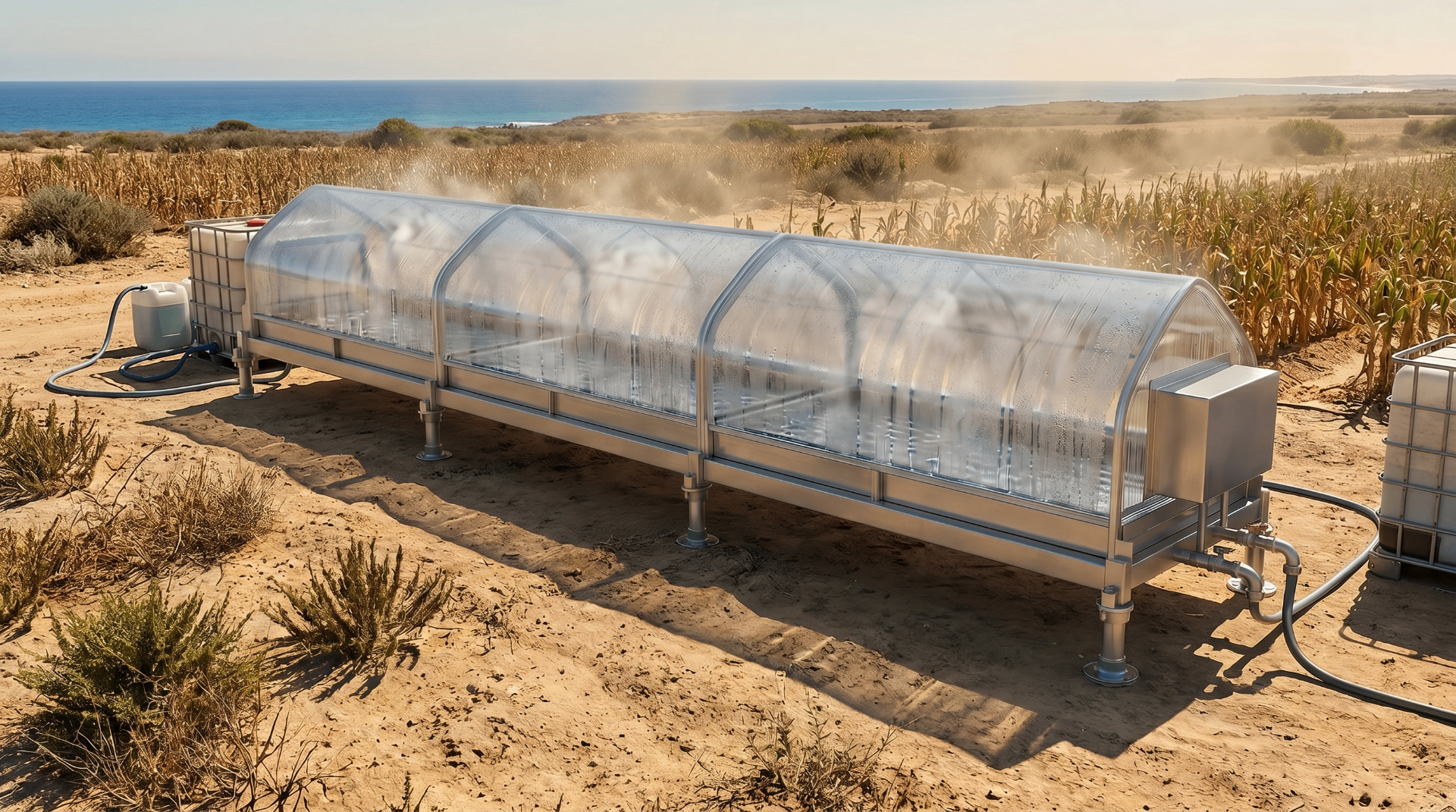
Off-grid families, smallholders and coastal homesteads who need reliable drinking and garden water without a utility connection.
Regenerative farms, NGOs and village cooperatives restoring soil, growing salt-tolerant crops, or supplying livestock and community taps.
Resorts, aquaculture, greenhouses and agribusiness sites that need predictable freshwater plus brine by-products for on-site use or resale.
Land-restoration programmes, municipal partners and industrial plants deploying full ReGen fields with fleet-wide IoT supervision.
See if your site is a fit.
We start with a free feasibility study — soil, salinity, water demand, layout.